
Digital marketing for small business 2026 is one of the most effective ways to attract customers, increase sales, and build a strong online presence. Running a small business in 2026 means competing in a marketplace where customers spend hours online searching Google, scrolling social media, watching YouTube, and shopping on e-commerce platforms.
Running a small business in 2026 means competing in a marketplace where your customers spend hours every day online — searching Google, scrolling Instagram, watching YouTube, and shopping on e-commerce platforms. Digital marketing is how you reach them where they already are.
The good news: you don’t need a massive budget. You need a smart strategy. Here’s a practical, step-by-step guide built specifically for small business owners.
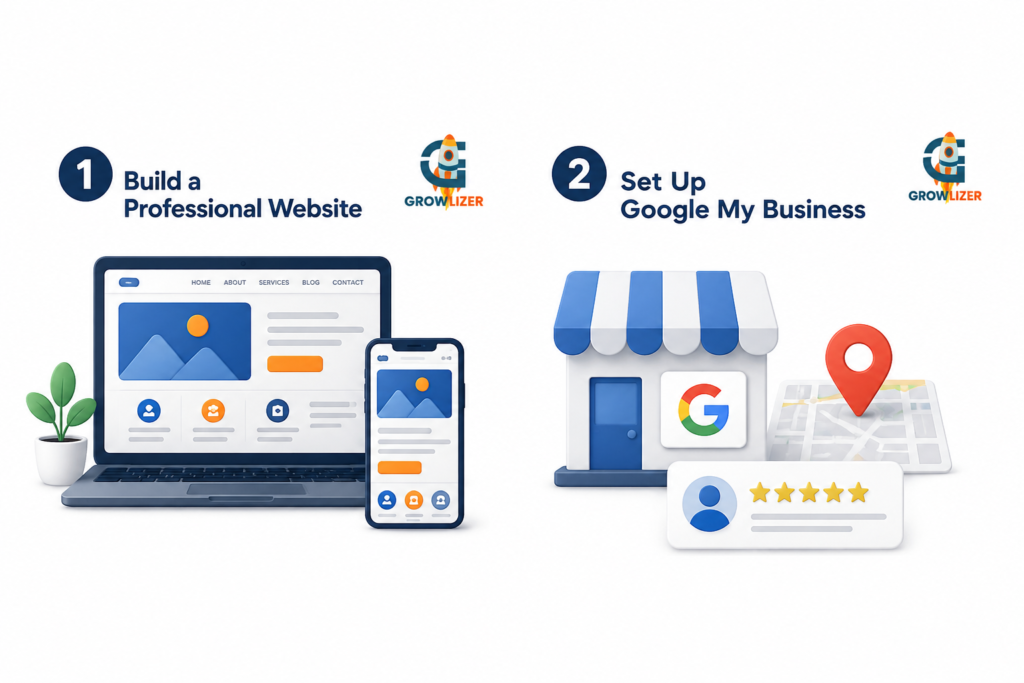
Step 1: Build a Professional Website
Digital marketing for small business 2026 helps companies compete online.
Your website is your digital headquarters. Everything else in your marketing strategy points back to it. In 2026, a professional website must be:
Mobile-friendly (over 60% of web traffic comes from phones), fast-loading (pages that take more than 3 seconds to load lose 40% of visitors), clear about what you do and who you serve, and easy to contact or buy from.
You don’t need anything fancy to start. A clean, well-designed 5-page WordPress or Shopify website covers your homepage, about page, services/products, blog, and contact page.
Step 2: Set Up Google My Business
Google My Business (now called Google Business Profile) is completely free and incredibly powerful for local businesses. When someone searches “restaurant near me” or “plumber in [city]”, Google shows a map with local businesses. This is where you want to appear.
Set up your profile with accurate business information, photos, opening hours, and your website link. Encourage happy customers to leave Google reviews — they significantly impact your local ranking.
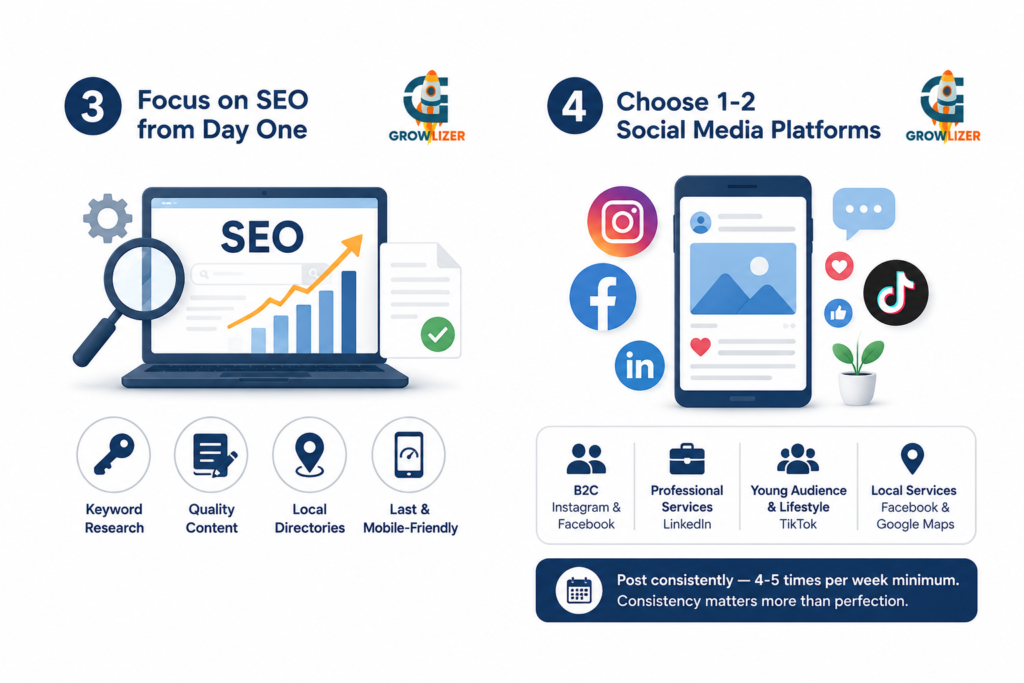
Step 3: Focus on SEO from Day One
SEO takes time — typically 3-6 months before you see significant results — which is exactly why you should start immediately. Basic SEO for small businesses includes:
Using relevant keywords in your page titles and content, writing regular blog posts that answer questions your customers ask, getting listed in local directories, and ensuring your website loads quickly and works on mobile.
Step 4: Choose 1-2 Social Media Platforms
Every digital marketing for small business 2026 strategy should begin with a professional website. The biggest mistake small businesses make on social media is trying to be everywhere at once. Instead, identify where your customers actually spend their time and focus there.
B2C businesses (selling to consumers): Instagram and Facebook. Professional services: LinkedIn. Young audiences and entertainment/lifestyle: TikTok. Local services: Facebook and Google Maps.
Post consistently — 4-5 times per week minimum. Consistency matters more than perfection.
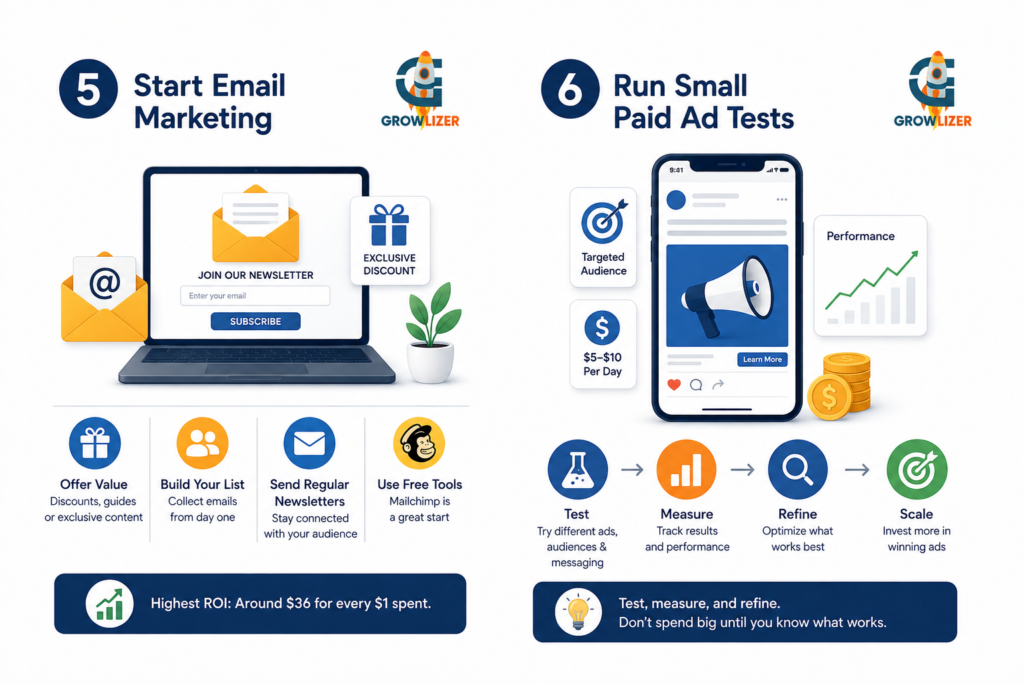
Step 5: Start Email Marketing
Email marketing consistently delivers the highest ROI of any digital marketing channel — around $36 for every $1 spent. Start building your email list from day one.
Offer something valuable in exchange for an email address — a discount, a free guide, or exclusive content. Use free tools like Mailchimp to start sending regular newsletters.
Step 6: Run Small Paid Ad Tests
Once your organic foundation is in place, test small paid advertising campaigns. Start with as little as $5-10 per day on Facebook or Instagram to reach a targeted audience.
The key is to test, measure, and refine. Don’t spend large amounts until you know what messaging and targeting works.
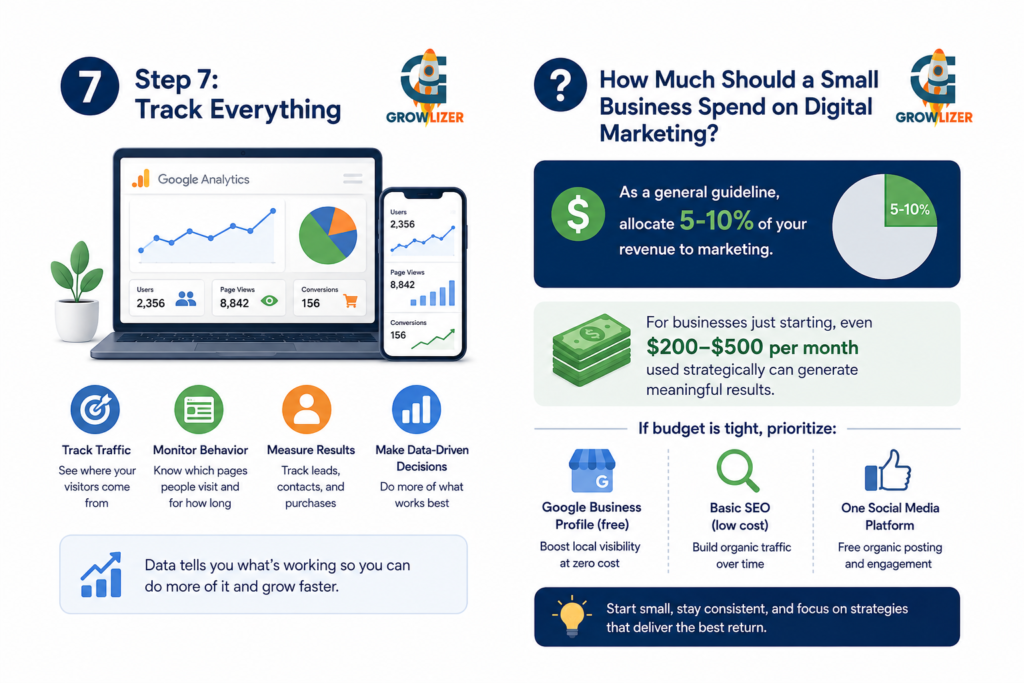
Step 7: Track Everything
Install Google Analytics on your website. Track where your traffic comes from, what pages people visit, and how many people contact you or make a purchase. Data tells you what’s working so you can do more of it.
How Much Should a Small Business Spend on Digital Marketing?
As a general guideline, allocate 5-10% of your revenue to marketing. For businesses just starting, even $200-500 per month used strategically can generate meaningful results.
If budget is tight, prioritize: Google Business Profile (free), basic SEO (low cost), and one social media platform (free organic posting).
Conclusion
Digital marketing for small business 2026 doesn’t have to be complicated. Start with a professional website, improve your SEO, build your social media presence, and consistently measure your results to grow your business online. Digital marketing for small businesses doesn’t have to be overwhelming. Start with the basics, be consistent, and build up gradually. The businesses that win online in 2026 are the ones that show up consistently and genuinely help their customers.